
When it comes to road safety, vehicular impact guardrails play a crucial role in protecting both drivers and pedestrians. However, these essential safety features are often subjected to harsh environmental conditions that can lead to corrosion, compromising their structural integrity. In this comprehensive guide, we will explore effective corrosion control methods for vehicular impact guardrails, ensuring they remain a reliable line of defense on our roads.
Singapore Specialized Engineering Pte ltd

Category: Metal Fabrication
Vehicular Impact Guardrail End Wing

A vehicular impact guardrail end wing is a specially designed structure installed at the ends of guardrails. They serve a specific purpose: to minimize the risk of vehicle accidents by redirecting vehicles that may stray off the road. These end wings are typically made of high-strength materials, ensuring they can withstand significant force during a collision.
Vehicular Impact Guardrail Spare Parts

Vehicular impact guardrails are safety barriers designed to absorb the energy of a vehicle collision, thereby minimizing the risk of injury to passengers and preventing vehicles from veering off the road. These guardrails are typically made from high-strength steel or composite materials and are strategically placed along highways, bridges, and other critical areas.
Vehicular Impact Guardrail Post

Vehicular impact guardrail posts are vertical supports that hold guardrails in place along roadways. These posts are designed to absorb and redirect the energy from vehicles that may collide with them, thereby minimizing damage to the vehicle and its occupants.
Antirust Vehicular Impact Guardrail

Antirust vehicular impact guardrails are protective barriers installed along roadsides, bridges, and other high-risk areas. Their primary purpose is to minimize the impact of vehicles colliding with obstacles, thus preventing serious injuries or fatalities. The “antirust” designation refers to a specialized coating or treatment applied to the guardrails, enhancing their resistance to corrosion and extending their lifespan.
Industrial Vehicular Impact Guardrail
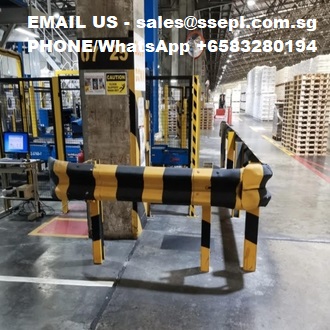
Industrial vehicular impact guardrails are robust safety barriers designed to protect personnel, equipment, and infrastructure from the potential hazards posed by moving vehicles. Constructed from durable materials such as steel or reinforced concrete, these guardrails absorb impact energy and prevent vehicles from breaching critical areas, thus minimizing the risk of accidents.
Paint Finish Vehicular Impact Guardrail

Vehicular impact guardrails are safety barriers designed to absorb and deflect the energy of a colliding vehicle. Typically made from steel or aluminum, these guardrails are installed along highways, bridges, and other critical areas to prevent serious accidents. However, the effectiveness of these guardrails goes beyond their structural integrity; the paint finish also plays an essential role.
Hot Dip Galvanized Vehicular Impact Guardrail

Hot dip galvanization is a process where steel is coated with a layer of zinc by immersing it in molten zinc at high temperatures. This method not only provides excellent corrosion resistance but also enhances the durability and longevity of the steel. The result is a robust guardrail that can withstand harsh environmental conditions, including heavy rain, snow, and extreme temperatures.
LTA Standard Vehicular Guardrail

The Land Transport Authority (LTA) in Singapore has established a set of guidelines and standards for vehicular guardrails aimed at enhancing road safety. These guardrails are designed to protect motorists, pedestrians, and cyclists from potential accidents, particularly in areas where there is a higher risk of vehicles veering off the road.
Double Vehicular Guardrail

A double vehicular guardrail consists of two rows of guardrails positioned parallel to each other along roadways or bridges. This design provides an added layer of protection for both vehicles and pedestrians, effectively reducing the risk of accidents and improving overall safety on the roads.